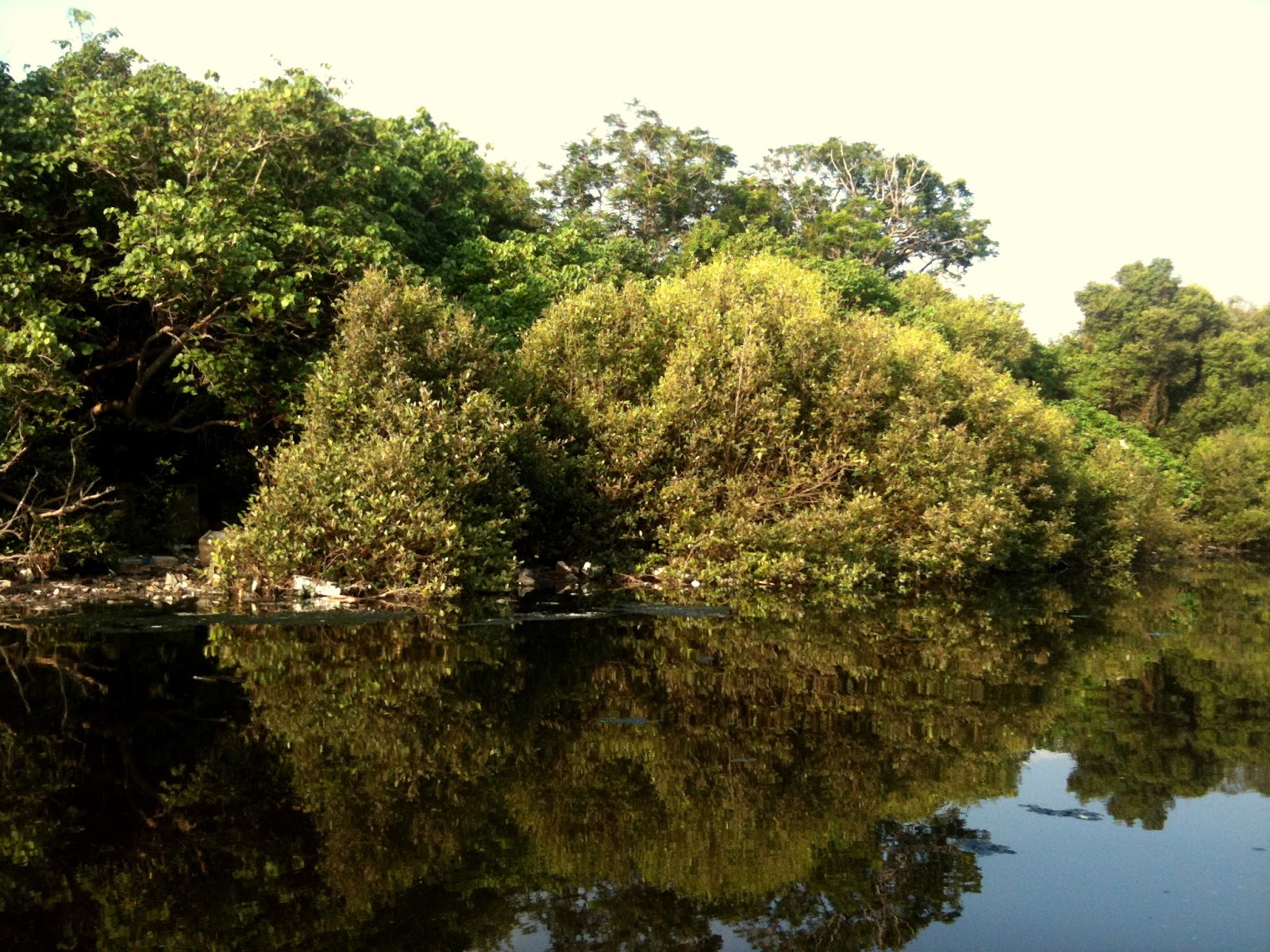
It was a Sunday morning in the month of April, 2011. Walking through the ipomoea matted roads with the sun on my face, felt so relaxing. I was walking to the Broken Bridge (500m from Elliots beach), where the sea meets the river, where the mangrove babies struggle their way out of the earth. Myself and few of my friends from Reclaim Our Beaches decided to visit the mangrove island down the river, where huge mangrove forest exist in secrecy from the city's atmosphere. A walk down the bridge showed me the degradation that the estuary has undergone. Dead fishes floating in the river, few were gasping for their last breath of air and fishermen collecting these fishes in the nets and transporting them to market. It was an awful sight. Couldn't do much!
We had hired a Catamaran to wade through the murky black waters of the Adyar river. Myself and my friend Sid Hande were the lucky two who made it on the boat. More than that and the boat would topple. Getting on to the catamaran and balancing ourselves needed some knack. And traveling for the first time in the estuary where I never would have even imagined, was an experience in itself. We had few crab friends as they hitched a ride with us tickling our foot and resting on our slippers.
The boat ride was a revealing journey. Certainly it disproved my ideas about mangrove ecosystems in the city. Our initial ideas were to conserve the baby mangroves which grow near the Broken Bridge, but this boat ride threw light upon the existing biodiversity and the challenges faced by these mangrove forest. Once pristine, now these mangrove islands are flooded with Styrofoam, plastics and what not. This clearly shows waste mis-management practices in Chennai city. Even the uninhabited and isolated islands are victims of our ever growing trash culture.
While trying to look out for solutions, I stop and ponder whether have I been asking the right questions.
Glimpses:
Photo courtesy: Siddharth Hande


 |
| Mangrove Forest, Adyar Esturay. Photo: Sid Hande |
 |
| Distant shot of Broken Bridge. Photo: Sid Hande |
First few meters into the river and we were already amazed by looking at the mangroves surviving in the banks of the river. I was asking myself whether I'm in Chennai or some where else on earth. Moving closer to the islands, I was silently contemplating of how the estuary might have looked few decades ago when it was pristine. My vision was spilling all over. Addition to that Saravanan (fisherman/activist), our friend was telling joyous childhood stories of how he would come to catch shrimps in the estuary and silently sink into the lush mangrove forests. The boatman was telling his own stories of how he survived with group of friends, 18 days lost in the sea and finally found by the Indian Navy.
The boat ride was a revealing journey. Certainly it disproved my ideas about mangrove ecosystems in the city. Our initial ideas were to conserve the baby mangroves which grow near the Broken Bridge, but this boat ride threw light upon the existing biodiversity and the challenges faced by these mangrove forest. Once pristine, now these mangrove islands are flooded with Styrofoam, plastics and what not. This clearly shows waste mis-management practices in Chennai city. Even the uninhabited and isolated islands are victims of our ever growing trash culture.
While trying to look out for solutions, I stop and ponder whether have I been asking the right questions.
Glimpses:
Photo courtesy: Siddharth Hande